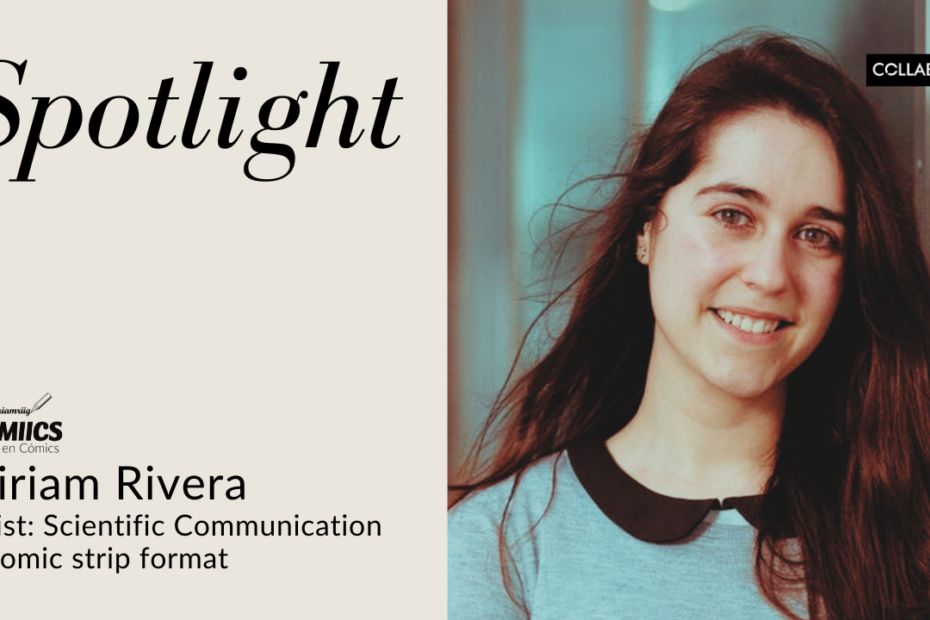
SPOTLIGHT MIRIAM RIVERA ON HOW TO TRANSLATE SCIENTIFIC CONCEPTS INTO DRAWINGS
About you lately
Life’s too short to live on autopilot.
Your morning routine?
Work. But getting dressed first. Working from home makes it very tempting to stay in pajamas, unless you have an online meeting that forces you to put on a decent t-shirt. I did that for a long time. Until I started feeling neglected, like I never looked good. It sounds superficial, but looking good puts me in a better mood and gives me more energy. Then I can make my coffee and start the day with my headphones and lo-fi music.
How do you like to help others?
I like to contribute to people’s success. I’m the friend who, as soon as she finds out you’re looking for a job, will send you every opportunity she can find on WhatsApp, haha.
Besides that, one of the ways I help is specifically through my brand, Biomiics – Biology in Comics. With this, I help researchers and communicators from research centers, universities, hospitals, and companies in the science and health sector to make their projects and innovations stand out, ensuring their science is clearly understood, valued, and remembered. I do this through what I’ve done my whole life and what I do best: comics. I help them convey the right messages in a different and visual way to gain visibility and authority with their target audience and secure collaborations and funding opportunities that allow them to continue growing and contributing to society through their science.
Do you have any advice for being creative as an artist? Do you use creativity or collaboration tools in your work?
One of the most creative parts of my work isn’t so much drawing, but finding a way to translate scientific concepts into words that anyone can understand. That is, an analogy or a metaphor that helps me articulate the narrative thread I’ll use to tell your research story. We’re not always inspired, and ideas don’t always come to us immediately. Sometimes it helps to rest and leave it for another time, or talk it over with someone else. But when I get stuck, I’m alone, and deadlines are looming.
I follow a method that helps me:
1) I think about the keywords I need to explain the scientific concept in question.
2) With each of those words, I create word trees: I think of many other words that I can relate to each keyword, even if they have nothing to do with the keyword itself. It’s like a brainstorming session where you simply wander.
3) I look for something that connects some of these new words. That connection can become the metaphor I’m looking for.
If anyone wants to try following this method in more detail to create their own scientific metaphors, I encourage them to try it with my ebook, “Create Your Scientific Metaphor in 5 Steps and Make Everyone Understand and Remember Your Research.”
How do you find your motivation?
In several ways. One of them is remembering why I’m working and being grateful that I’m doing my dream job. I’ve loved drawing since I was little, especially comics and manga. I studied Human Biology, a fascinating field. Today, I’m drawing comics to help raise awareness and appreciation for the work of scientists. And I can do it all from home! I never thought this could be a “real job.”
Another one is taking care of my free time. My usual routine can’t be that of the typical freelancer who works 10 hours a day and weekends until they burn out. The times I’ve been living like that have been terrible for my health. And without health, there’s no purpose that can maintain motivation or keep me working.
Your tools for staying up-to-date with the art, research, and creative community
LinkedIn helps me a lot to follow the work and progress of my colleagues, and it’s allowed me to meet very interesting people with whom I’ve collaborated and from whom I’ve learned a lot. But there’s certainly nothing like meeting up at science communication conferences and other in-person events to learn about other professionals’ projects, get ideas from what they do and how they do it, and, above all, grab a drink to catch up.
THE MIRIAM RIVERA’S MASTERCLASSES INSIDE COLLABWITH ACADEMY
MASTERCLASS Make your science stand out: From research paper and project results to comic strips with Miriam Rivera
20 February, 12noon CET
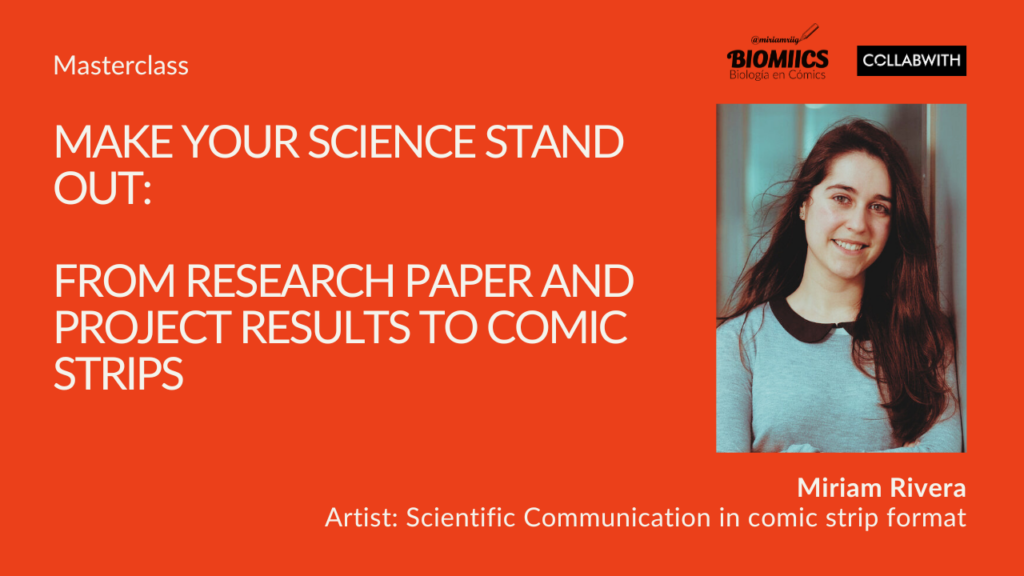
How do you transform a scientific paper into a comic that grabs attention and is easily understood? In this masterclass, we’ll walk you through the entire workflow, from the initial brief to the final comic, to convert research results into clear, memorable, and shareable visual stories. You’ll see real-world examples of projects that achieved more citations, media coverage, and a stronger connection with their audience thanks to the comic format.
MASTERCLASS Visual metaphors: How to make your research and innovations understandable and memorable with Miriam Rivera
27 March, 12noon CET
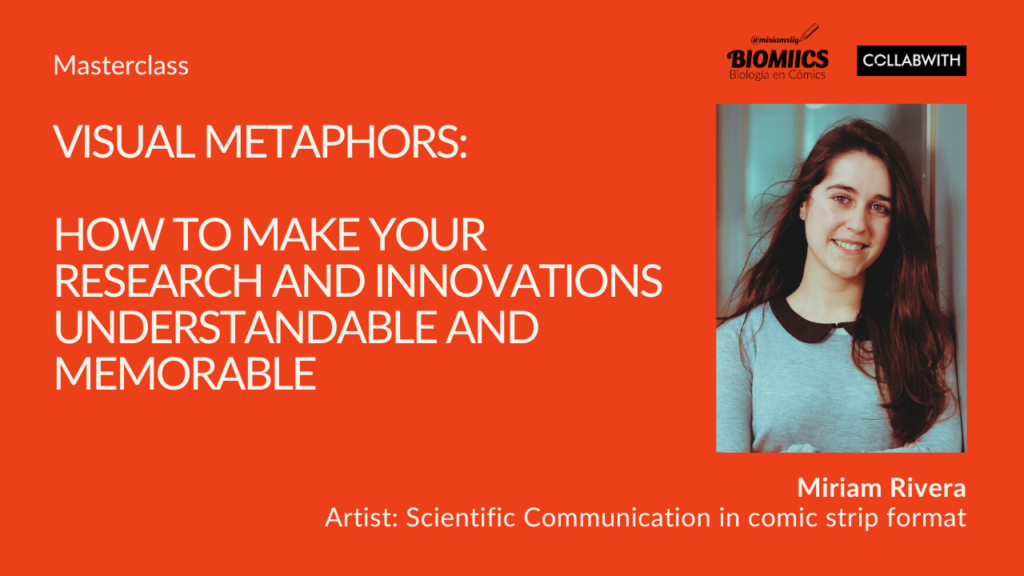
How to make abstract scientific concepts understandable? In this masterclass, we’ll explore the power of visual metaphors to connect with your audience, evoke emotion, and facilitate comprehension. Through examples and a creative activity, you’ll learn how to translate complex ideas into simple images using only pen and paper.
MASTERCLASS Science and art: How to work with artists and designers in a co-creation process and not die trying with Miriam Rivera
24 April, 12noon CET
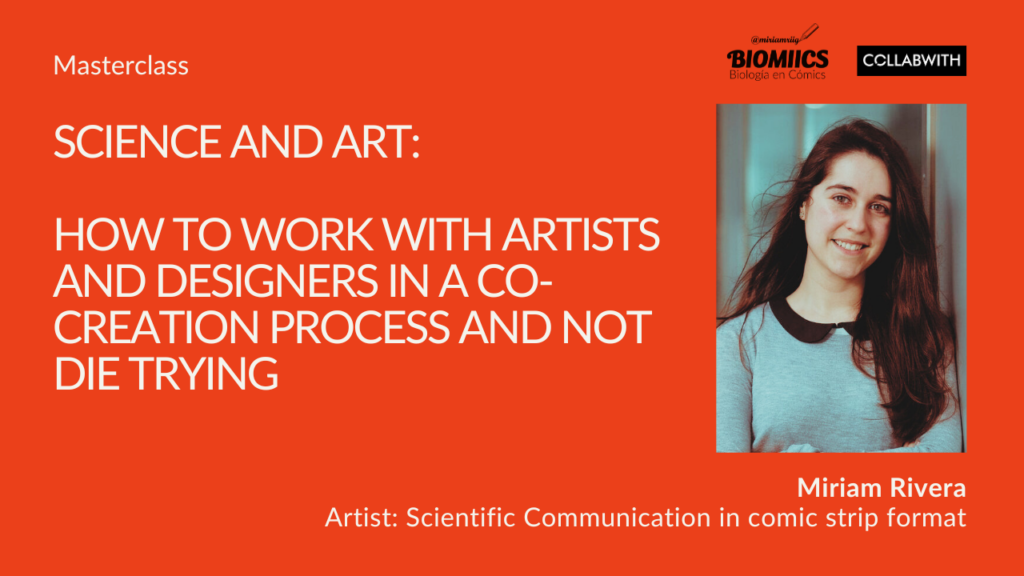
How to collaborate with artists and designers without frustration, misunderstandings, or endless rework? In this masterclass, you’ll discover what information they need to transform your science into a powerful visual work, how to prepare a truly effective brief, and how to give useful feedback that propels the creative process. We’ll explore examples of co-creation between artists and scientific institutions and how these collaborations transformed the way these organizations communicate and work.
Check our live masterclasses academy calendar
ABOUT MIRIAM RIVERA
Miriam Rivera, a graduate in Human Biology with a Master’s degree in Scientific, Medical, and Environmental Communication, she began publishing her first science comics on Twitter with the aim of disseminating scientific advances through comics. She currently combines her work as technical secretary and communications manager at the Catalan Association of Scientific Communication with her own brand, Biomiics – Biology in Comics. She has worked for organizations such as King’s College London, the University of Bristol, and the European Food Safety Authority, among other research centers, companies, and universities.
ABOUT COLLABWITH
Collabwith is a technology and a service to structure collaboration for innovation. It’s a tool to connect academics-startups-organizations. Because a tool is not enough to transform how you collaborate, here we have created a new methodology, personalized trainings, a new way of communication and a tailored made consulting for you to be more effective and efficient, now.
Grow your business and innovation through smart collaborations with Collabwith innovative and holistic approach to collaboration.
Magazine: https://collabwith.co
CollaborationXInnovation Platform: https://platform.collabwith.co
Do you want to know more? Book a demo with us, Contact us here.